Monday, September 23, 2019

Why Montessori

Why Montessori?
Montessori…your children have the benefit of a free public charter school that provides the lifelong benefits of this unique and proven method.  Montessori gives students a love of learning, a deep understanding of science, math and language, the ability to discover and invent and a strong level of confidence and self control.
Here are some facts that will show why Montessori is the best possible education for your child and the importance of completing the primary, lower elementary and upper elementary years at AMCS. 
The primary classroom:  ages 3-6 years
Primary students stay with the same classmates and teacher for three years.  During this time the teacher develops a deep understanding of the students, how they learn and what their interests are.  The children form strong friendships that sometimes last a lifetime.  With each year the children become more confident, self motivated and eager to learn.  The third year is the most important of all.  Much of the work is completed in that last year.  Math and language lessons culminate in a real exploration built on the previous years.  Each student becomes a leader of the class, helping the younger students and building confidence in their ability to solve problems and be independent.  Each student progresses at his or her own pace with the teacher keeping careful records of which lessons have been mastered.  This allows the students to deeply explore areas of interest while ensuring all of the necessary work is completed.  The curriculum includes practical life, music, geography art, science, botany, cultural studies, sensorial work which is pre-math, language development, including reading and writing, math, using the concrete materials to explore numbers, addition, subtraction, multiplication and division as well as basic solid and plane geometric figures.  Each day there is opportunity for new adventures in this rich world of learning.
The Elementary Classroom:
Divided into lower elementary (ages 6-9) and upper elementary (ages 9-11) this is the time for the student to use the skills and knowledge from the primary classroom to move into deeper study of the world and academics.  This age child loves to work in groups, to explore facts and information, to categorize and work extensively in all areas.  The materials are comprehensive and exciting, giving the children keys to the history of our earth and people.  Books from our large library encourage exploration of their interests.  Again, the students stay with the same teachers and classmates which provides a deep understanding of each child and builds strong bonds.  The teacher can truly develop a strategy to maximize each student’s potential, guiding them through the lesson plans which are made collaboratively and with an individualized understanding every child.  A true knowledge of how to work together, to solve problems and to concentrate and focus develops because of the unique nature of the curriculum, the attention of the carefully trained teachers and the natural interest of the students in their work. 

The Adolescent community (ages 12-14) provides these young people opportunities to expand their earlier experience by creating viable projects which utilize all of the skills they have learned from their Montessori education.  They collaborate on serious activities which  benefit others, taking full charge of costs, solving problems and planning.  Each day math, science, history, technology, music, art and language expand their understanding of the world and each other.  Lasting friendships are formed with the experienced and understanding teachers who guide and encourage each step of the way to becoming an intelligent, hard-working and caring young adults.  As they go on to high school and college all of this preparation and knowledge forms a solid base for success and continued learning with joy.  
Only with the full experience of the primary,  elementary  and adolescent classes can the true power of Montessori be obtained.   Giving your children this amazing opportunity to grow, learn and start on a lifetime of learning is a great gift. 
Our teachers and administrators form a deep bond with the AMCS families; united in our common goal of having each child reach his or her academic, social and personal potential.  We are truly a team united for the development of the future leaders of our community and world and in the pursuit of joyful lifelong learning.


Tuesday, April 9, 2019

Your Montessori Home


Your child is thriving in the Montessori classroom.  You see signs of increased independence, love of work and growing social skills.  How do we prepare our homes to continue this great work of the child?

School and home are, and should be different.  We do not need to create an academic world at home.  Think how we would feel if we arrived home from a challenging job only to find our job has been recreated at home and we need to continue working that same way.

The 3-6 year old child can be summed up in this phrase: "Help me to help myself."  This is the time for developing the mind and body for the great work to come.  Independence grows as children learn to care for themselves and their home.  Their intellect develops with stories, songs and books in the home, with toys that support their curiosity about how the world works.  The strong sense of order that is part of this age is developed with a place for everything and everything in its place in the home. Concentration comes from time to contribute to the home and to have time to focus on their interests,  So how can we create this in our homes?

Let's look at each room:

The living room:  A child size chair and table, a low shelf for books, a shelf for a few toys, perhaps a small lamp on the table.  Toy boxes are not ideal as they cannot give the child a place for belongings.
It is nice to have some art work displayed at the child's eye level. Be aware that if a television or other electronics are in use your child is absorbing what is being seen and heard, even if they appear to be not paying attention.  Remember that for this age child only 1/2 hour a day of all screen time combined is a safe level.


The kitchen:  This is an area of great interest.  A small step stool to give access to the sink for hand washing and food preparation, a child size apron on a low hook, an area in the refrigerator with a small tray holding water and snacks, child size kitchen tools and a basket containing cloths for cleaning up spills all contribute to fun and a sense of independence. Low plates, flatware and glasses so the child can set the table.

The bathroom:  A step stool for the sink and toilet, a small bar soap or a liquid dispenser that the child can operate, A low towel bar for hand and bath towels  A basket or container for bath toys.  Be sure your child can reach the toilet paper unassisted.

The bedroom:  Be sure your child's bed is not too high to get into unassisted and easy to make up.  Light blankets help with making the bed.  A small flashlight for comfort in the dark.  A bookshelf and perhaps a small rocking chair or other comfortable seat.  Shelves for a few toys which can be rotated to help the child be organized.  A low drawer for folded clothes and low hangers and hooks.  A shoe rack.  Televisions, cell phones and video games should never be in the bedroom.  They are a distraction from relaxation and sleep.

Outdoors:  Child size gardening tools and a watering can.  A small bucket and sponge to help with washing the car or bikes.  Sidewalk chalk in a basket.  A parking spot for bikes and other riding toys.

These are a few beginning ideas to help your child's sense of independence and capability.
Remember that this age child is working for the experience, not the result.  Be sure to acknowledge the effort and not the result:  "You made your bed!  The pillow is at the top and your pajamas are put away.  The blanket in on the bed.  You are taking care of your room."  Now the blanket is not smooth and is dragging on the floor, the pillow is crooked..and it is important not to correct at this point.  It is helpful to show the child the first time, then let their observation gradually improve.

Giving all family members opportunities to contribute to the family and the home will result in increased confidence, eagerness to work and a strong connection to the family and the home.  You are setting the stage for responsibility and joy in work...life skills that will be valuable all through life.

The next post will give ideas for the 7-15 year old!  A very different child indeed.


Wednesday, March 20, 2019

Spring time! Having fun the Montessori way.


Spring time...we all want this to be a time of fun and relaxation with our families and friends.  We don't have to spend a lot of money, fight crowds of people or travel many miles to have a great time.

Picnics at nearby parks can be wonderful.  Pack a lunch, grill a burger, go kayaking, hike or bike the  trails, play games or read a book near a lake or under a tree.  With a little planning you have all you need for days of family fun.

We are fortunate to have many beautiful and free places close by.  Here are a few ideas to get you started.
Alexander Deussen Park:  http://hcp1.net/Parks/AlexanderDeussen.hiaspx
Fishing, swimming, hiking, a great dog park, many playgrounds, kite flying, boating, picnic areas..this free park has it all.  Lake Houston is at our doorstep...enjoy!

Jesse Jones Park: http://www.hcp4.net/community/parks/jones
This treasure on the far north side of the city has a lot to offer.  Visit the web site for a list of ongoing activities.  Pontoon boat rides, a visit to a pioneer and Native American village, a nature center, miles of hike and bike trails and fishing in Cypress Creek, plus lots of playground and picnic opportunities will make any family happy.

Galveston Island State Park  http://tpwd.texas.gov/state-parks/galveston-island
Just a short trip down I45 and a day of beach, sun, sand and picnicking waits your family.  For a small fee the day is yours.  Grills and covered picnic tables are just steps from the beach and on the bay side of the park miles of trails and lots of beautiful birds will entertain you for hours.

On the east end of Galveston Island there are miles of beaches, great fishing and the Galveston/Bolivar ferry.  This free ferry ride goes to Bolivar Peninsula.  You can park your car and walk onto the ferry for a round trip ride, or take your car aboard and explore the peninsula.  Dolphins play alongside the ferries and gulls swoop down to catch bits of bread from the passengers.  Great fun!   http://www.galveston.com/galvestonferry/

Brazos Bend State Park http://tpwd.texas.gov/state-parks/brazos-bend
Screened in shelters and campsites are available if you would like to spend a few days with nature at its best.  The George Observatory located in the park gives a stunning view of the night sky.  More information is on the above web site.  Hiking, fishing and alligator watching provide thrills and picnic areas and grills are ready when you are hungry.

 These are just a few of the opportunities nearby.   For the best time include the children in the planning.  Older boys and girls can do research and plan the route to the park.  Everyone can help pack supplies and food.  The whole family can make a list of what to take along! Don't forget kites, balls, blankets,  bubbles and books.  The preparation for the outing can be as much fun as the trip.
This is a good time to leave the electronic games at home, relax and enjoy this special time with the children!

HAPPY SPRING!

Thursday, February 28, 2019

Get Growing! Gardening with children.


How gardening can affect the BRAIN:
 The wonder of seeing a garden grow may spark your kids to ask questions like: Why do the plants need sun? How does the plant “drink” water? Why are worms good for the plants? Soon you will be talking about soil composition, photosynthesis and more! Add a little math while gardening by measuring how much plants are growing from week to week or counting the flowers on each plant. Supplement the experience of gardening with books about plants, trips to a botanical garden, or a photo journal of the plants that you are growing.
Once you harvest your produce, think of all the brain-building vitamins, minerals and nutrients your kids will be eating and how that will continue to boost brain development. Foods like spinach, garlic and beets (which are all easy to grow) have been shown to help with cognitive function and can give your kids an advantage in their growth and development. Even if kids may not love the foods they grow at first, teach them to keep tasting and trying and to train their taste buds to enjoy the bounty of their garden.
How gardening can affect the BODY:
When children participate in gardening, the fruits and vegetables that they are inspired to eat will no doubt have a positive effect on their body. But the act of gardening itself can also promote a healthy body. Kids LOVE to get their hands and feet in the dirt, which can run counter to the modern parenting style of compulsively keeping hands and surfaces cleaned and sanitized. However, consider the “hygiene hypothesis,” a theory that a lack of childhood exposure to germs actually increases a child’s susceptibility to diseases like asthma, allergies and autoimmune conditions by suppressing the development of the immune system. So getting dirty while gardening may actually strengthen a child’s immunity and overall health.
These days all kids could benefit from a little more physical activity and sunshine they’ll get while gardening. Activities like moving soil, carrying a heavy watering can, digging in the dirt and pushing a wheelbarrow can promote gross motor skills and overall strength for a more fit body. Plus, these activities, known as “heavy work,” have been shown to help kids stay calm and focused.
How gardening can affect the SOUL:
In this electronic age, kids need time for meaningful family connection. Time in the garden allows for team building and promotes communication skills. Planning a garden, planting the seeds and watching them grow give kids a sense of purpose and responsibility. Making sure that the plants get enough fertilizer, water and sun fosters mindfulness. The concepts learned while gardening, like composting food scraps for fertilizer or using gathered rainwater, can show kids a deep respect and responsibility for taking care of our planet.
Furthermore, studies show that when children have contact with soil during activities like digging and planting, they have improved moods, better learning experiences and decreased anxiety. Most important, the self-esteem a child gets from eating a perfect cucumber that he grew himself is priceless.

Grow hearts, bodies and minds together!

Thursday, February 14, 2019

Consequences Instead of Punishment: Building character and maturity


We have all been there...our child makes a poor choice and creates a problem for his or her self.  We know we want them to learn an important lesson, but how to bring that about?

And what is the difference between consequence and punishment?

Punishment is often not related to the problem at all.  For example...see the bike at the top of the page?

Mom and Dad finally bought the much wanted bike for their son.  A designated place was marked off in the driveway (or garage) and the child was told: " When you are not on your bike it must be in its parking place and no where else.

One day the boy was in a hurry to get inside and he left the bike in the middle of the driveway.  Sadly, a delivery truck did not see it and ran over it.
Oh, the wailing and tears.  "Dad, dad my bike is ruined.  I love that bike so much."

So the punishment response might be: "See I told you what would happen if you left that bike in the wrong place.  And now it is ruined and you don't have a bike.  You need to pay attention when I tell you something.  You will have no TV for two weeks.  Maybe that will teach you to be more responsible."
As understandable is the parents anger, this punishment and response is not the best way to get the result of better behavior.  It is not directly related to the mistake.

Now for the consequence response:  Oh, my son.  I know how much that bike means to you.  You really love having it, don't you?"  This is empathy and sympathy, but NOT approval of the mistake.
The boy gets that Dad understands how upset he is and replies:
"Can I have another bike, please, please?"  Of course we might want to reply, "No way.  You left it out and now it is gone."

So try this: " Yes, you can have another bike.  How do you plan to pay for it?"  This puts the problem back in the child's lap.  He will probably say that he doesn't have any money.  Responding with "Well we can talk about some ways for you to earn money.  And you have some money from your birthday."  It may take a long time for the money to accumulate (and the parent can chip in after a while or offer payment for extra jobs around the home).  This is a real consequence of the child's actions.  It is a lesson that is fair, delivered without anger, and gives him a way to right the wrong. From this he will learn responsibility, the advantages of hard work, and that his parents are fair and reasonable, but follow through when mistakes are made.

As with all new things, it may take a while to get comfortable with this approach, but the dividends are worth it.  The time to teach responsibility is when the child is young.  These are what we call affordable mistakes, mistakes that do not have dire results.  We want our children to learn these lessons before the teen years, when mistakes and errors in judgement can have serious consequences and even life changing problems.


Tuesday, December 11, 2018

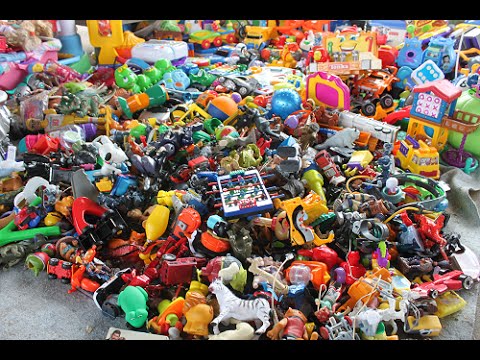
Too Many Toys...A Fun Solution!

Image result for lots of toys

Presents from parents, grandparents, birthdays, holidays.....sometimes the number of toys can overwhelm the most organized of homes.  What to do? 

I'll share with you an idea from my daughter that not only worked, but was fun, taught some excellent lessons and was done without too much time, work and money.

Step 1.  In a kind and gentle way talk with your family.  Point out that we have many things we have outgrown, no longer use or just don't like.  Suggest that everyone go through their belongings (including toys) and choose anything that is no longer wanted or needed.  Have everyone bring the items together in one place. This is a great time for parents to choose some of their own belongings they no longer need or want. 

Step 2.  Choose a charity to donate the items, explaining that another family will be able to use these, then pack them up and take to the donation site.  Make it a fun trip and talk about how happy this will make someone. Make sure your child goes along and helps carry the items.  This will make them feel a part of the gift to others.

Step 3.  Purchase a large cabinet to be kept in an out of the way place.  The garage is great, or an unused closet will work.  

Step 4.  Tell the child "This going to be your toy store."  Then let the child choose from their toys (with your help) to go into the cabinet.  Make sure the remaining toys are neatly arranged on shelves or in boxes in their room or where ever they keep their toys. A sign on the cabinet door "Tom's Toy Store", using your child's name of course, is a great touch. 

Step 5.  Arrange the chosen toys in the cabinet by category (puzzles, games, dolls, trucks, etc.) 

Step 6.  Tell the child that the store is open once a week (or two weeks) and they can visit then and purchase a toy by returning one of the toys they have kept out. 

This is fun, keeps the number of toys manageable, and teaches the child to make good choices.  Another benefit is that the toys are used more and are cared for more carefully.  

A little planning and effort can make a big difference!  Enjoy!

Friday, April 6, 2018

The Brain Changing Power of Conversation


The Brain-Changing Power of Conversation

Interplay between parents and children ignites the brain and boosts its response to language, spurring lasting literacy skills

Young girl smiles up at her mother
For parents, childcare providers, and early educators, new research describes a simple and powerful way to build children’s brains: talk with them, early and often.
A study in Psychological Science shows how conversation — the interplay between a parent or caregiver and a child — ignites the language centers in a child’s brain. It’s the first study to show a relationship between the words children hear at home and the growth of their neural processing capacities — showing, in effect, that how parents talk to their children changes children’s brains.
Don't just talk to your child; talk with your child. The interaction, more than the number of words a child hears, creates measurable changes in the brain and sets the stage for strong literacy skills in school.
This new work — led by Harvard and MIT Ph.D. student Rachel Romeo, with coauthors at both of those institutions and the University of Pennsylvania — builds on what researchers have long known about the connections between “home language environment” and children’s cognitive development, literacy and language growth, and verbal ability.
In the wake of a 1995 study that found a dramatic gap in the number of words heard by high- and low-income children — the so-called 30 million word gap — much attention has been given to efforts to enrich kids’ language exposure. But recent work has added nuance, showing that it’s not so much the quantity of words children hear as the quality that matters.
The new findings replicate that behavioral research on quality over quantity and extend it by showing the effects in the brain. “Specifically, after we equate for socioeconomic status, we find that the sheer number of words spoken by an adult was not related to children's neural processing of language, but that the number of conversational turns was,” says Romeo. “And that neural response, in turn, predicted children's language skills. It really is the quality of language exposure that matters, over and above the quantity of words dumped onto a child.” 
What Parents and Early Educators Should Know
  • From infancy, parents should look for chances to have conversations with their child — even if it's just responding to coos or gurgles. 
  • Conversational interplay between caregiver and child is enough to transform the biology of kids' brains. The quality of these exchanges is more important than the quantity of words children hear.
  • Conversation drives literacy skills and cognitive development across all socioeconomic levels, regardless parents' income or education. It's a powerful, actionable, and simple tool for all parents to use.

The Science

Researchers used highly faithful audio recorders — a system called Language Environment Analysis (known as LENA) — to capture every word spoken or heard by 36 4–6 year olds from various socioeconomic backgrounds over two full days. The recordings were analyzed to measure the number of words spoken by each child, the number of words spoken to each child, and the number of conversational turns — back-and-forth exchanges initiated by either adult or child.
Comparing those measurements with brain scans of the individual children, the analysis found that differences in the number of conversational turns accounted for differences in brain physiology, as well as for differences in language skills including vocabulary, grammar, and verbal reasoning.
Read the MIT News story for a fuller summary of the research. (Authors on the paper include Meredith Rowe of the Harvard Graduate School of Education, whose behavioral work has shown the importance of parent-child interplay; Martin West of HGSE, and senior author John Gabrieli of MIT.)

The Takeaways

The “conversational turns” are key here, the researchers say. Conversational interplay — a verbal version of the serve-and-return caregiving that helps kids thrive — “involves not only a linguistic exchange, but also a social interaction that we know is crucial to cognitive development as well,” Romeo says.
This work suggests how important it is that caregivers “not just talk to your child, but talk with them,” says Romeo. “Even from infancy, we can consider children to be conversational partners. Obviously, a ‘conversation’ looks very different with much younger children: with infants, it might be taking turns exchanging giggles or coos; with toddlers, it might be repeating and expanding their sentences; and with older children, it might be asking ‘who, what, where, and how’ questions.
“Either way, it seems to be the interaction that best supports children's language skills and the underlying neural development.”
"Obviously, a ‘conversation’ looks very different with much younger children: with infants, it might be taking turns exchanging giggles or coos; with toddlers, it might be repeating and expanding their sentences; and with older children, it might be asking ‘who, what, where, and how’ questions. Either way, it seems to be the interaction that best supports children's language skills and the underlying neural development."
Importantly, this research finds effects across all socioeconomic levels. “We found that the brains of children from lower-income families benefitted from conversational interplay just as much as the brains of children from higher income families,” says Gabrieli, the Grover Hermann Professor of Health Sciences and Technology at MIT and an investigator at the McGovern Institute for Brain Research. Conversing often with one’s children is “strikingly helpful” regardless of income and educational background, he says. As Gabrieli told the MIT News Office, “It’s almost magical how parental conversation appears to influence the biological growth of the brain.”
Gabrieli, Rowe, and other researchers are exploring ways to make these findings — and the actionable takeaways about the importance of conversation — accessible to all families. “Part of this is public health communication, but I expect that more direct forms of support will be needed to promote this and help parents change conversational habits,” Gabrieli says. “It is hard for all of us to change any habit."